Silence Isn't a Test: Making Sense of the Quiet Stretches on a Lesson
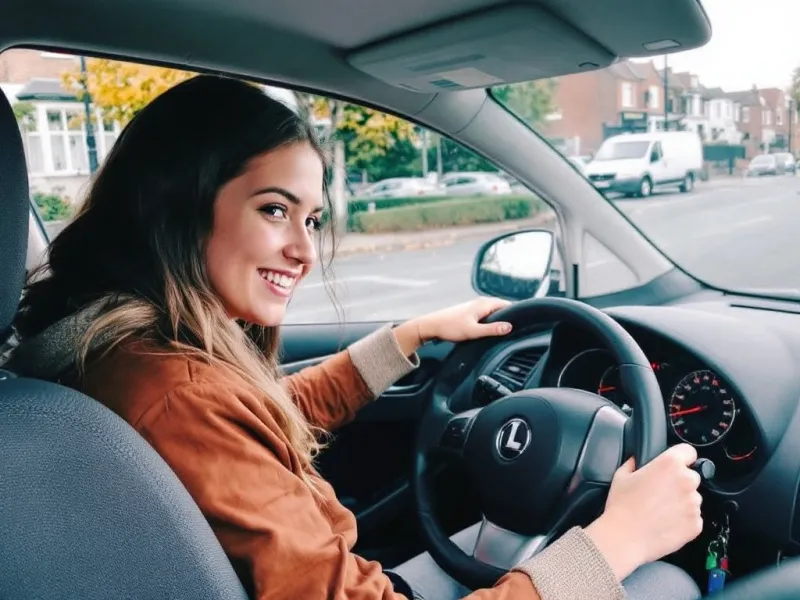
Photo: driving instructor observing learner driver in car UK quiet moment, via www.wimbledondrivingschool.com
There is a particular quiet that settles over a learner car just after a busy junction. The indicator has clicked off, the mirrors are set, and the next instruction hasn't arrived. For a few seconds, the only sounds are the tyres and your own internal alarm bells. Most learners fill that gap with a silent, panicky question: have I done something wrong?
Almost always, no. Your instructor has simply stopped talking on purpose. Learning to recognise that is one of the quieter milestones of driving tuition, and it's worth understanding properly.
The instructor who stops talking
Early lessons are noisy affairs. Directions come thick and fast because you need them: turn left after the lights, ease off for the parked van, check your blind spot before you move. As you improve, that commentary thins out. It isn't laziness and it isn't a test. It's a handover.
An instructor who keeps up a constant stream of instructions is doing the reading of the road for you. At some point that has to stop, or you'll pass your test and discover that the voice in the passenger seat has been doing a lot of the thinking. The quiet stretches are where your own judgement gets a turn at the wheel.
When silence is the lesson
Think about what a good instructor is actually doing during those minutes. They're watching your eyes move to the mirrors. They're noting whether you ease off before a bend or wait to be told. They're checking that you've spotted the cyclist before the parked cars narrow the road. They're giving you room to commit to a decision, because committing is the skill.
Sometimes they're also planning. A lesson is a moving puzzle: the next roundabout, the traffic ahead, the time left, the thing you struggled with last week. A brief pause while they think is not a judgement on your driving.
And sometimes they're simply staying out of the way. If you're approaching a mini-roundabout at a sensible speed with your mirrors checked and your plan clear, an instruction would be noise. Good tuition is not a running commentary. It's the right word at the right time, and often the right word is none.
Three flavours of quiet
Not all silence feels the same once you know what to look for.
The watching quiet. This is the common one. Your instructor is relaxed, hands away from the dual controls, eyes on the road ahead and occasionally on you. Traffic is normal. You are being allowed to drive. Nothing is wrong.
The thinking quiet. Slightly more paused, perhaps a glance at the clock or the route. This is admin, not alarm. Keep driving normally and the next instruction will arrive when it's useful.
The warning quiet. Rare, but real. It usually comes with other signals: a hand hovering near the wheel, a sharp intake of breath, a quick 'just check your mirror' rather than a full instruction. That's not a pop quiz either. It's a prompt that something needs your attention now. If the instructor does need to act, they will. Your job is to keep scanning and respond to the road, not to freeze.
How to tell them apart
You don't need to become an expert in body language. A few simple checks will do.
- Look at the road first. Is there a hazard that genuinely needs your attention? If so, deal with it. The silence is secondary.
- Check the instructor's posture. Relaxed shoulders and hands resting are a good sign. A hand near the dual controls means pay attention, not panic.
- Listen for short prompts. 'Mirror' or 'speed' is a nudge, not a telling-off. It's the instructor helping you finish a thought you'd already started.
- Notice the pattern. If the quiet arrives on a stretch of road you've handled well before, it's almost certainly deliberate space, not a trap.
What to do with the gap
Once you stop treating silence as an accusation, it becomes useful practice. Try a quiet running commentary in your head: mirror, signal, position, speed, look. Name the hazard you've spotted. Decide what you'll do if the bus pulls out. That internal voice is exactly what you'll rely on when you're driving alone.
If speaking aloud helps, do it. Many learners find that a low mumble of 'nothing coming, I'm happy to go' steadies the nerves and shows the instructor what you're thinking. It also gives them a natural place to correct a misread before it becomes a manoeuvre.
What you don't need to do is fill the gap with apology. 'Sorry, sorry, was that right?' turns a calm moment into a tense one. Keep your hands steady, keep your eyes moving, and let the road be the conversation.
If the quiet still rattles you
There's no prize for pretending to be fine. If your instructor's silences make you tense up, say so at a safe stopping point. A simple request works wonders: 'Could you tell me when you're deliberately leaving me to it? I find the quiet a bit unnerving.' Most instructors will happily agree a phrase, such as 'over to you', so you know the difference between being watched and being abandoned.
You can also ask them to narrate their own thinking at the end of a quiet stretch. 'What were you watching for there?' turns an uncomfortable gap into a debrief, and you'll learn more from it than from another instruction.
The test has quiet stretches too
This is the bit worth remembering. On your practical test, the examiner will sit beside you and say very little. They are not being unfriendly. They are assessing whether you can read the road without a prompt, which is precisely what those quiet lessons have been building.
So when the car goes quiet next time, resist the urge to panic. Check the road, check your mirrors, keep your speed sensible, and trust the work you've already done. The silence isn't a test. It's the sound of you starting to drive.