When the Dash Joins In: Reading Warning Lights Without the Panic

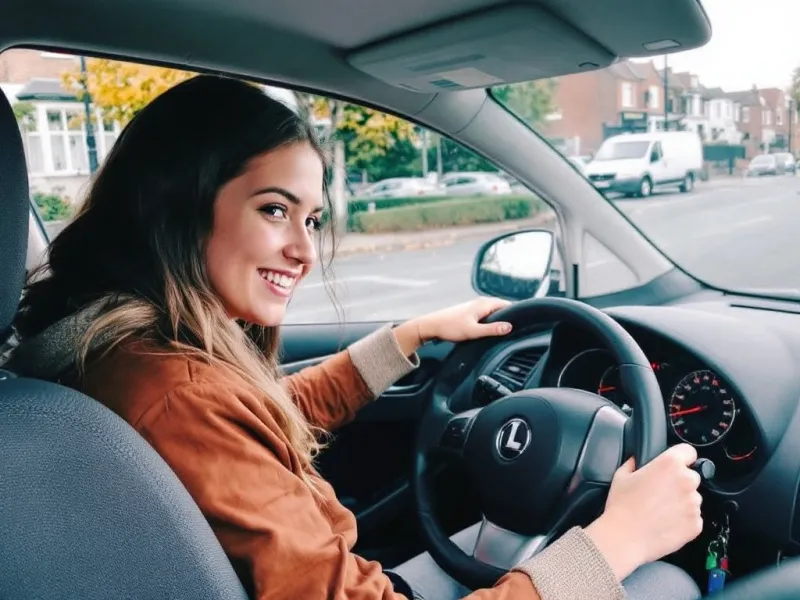
Photo by Photo by Swansway Motor Group on Unsplash on Unsplash
You are halfway through a lesson, perhaps holding a steady 30 through town, when a small orange shape appears on the dashboard. Then another. Maybe a red one joins in. The instrument panel starts to look less like a set of dials and more like a very serious pinball machine.
Here is the reassuring part: warning lights are messages, not verdicts. You do not need to diagnose a fault at 40mph, and you certainly do not need to memorise every symbol before your test. What matters is that you notice, stay calm, and take the next safe action. That is a driving skill in itself, and it is one worth practising.
Start with the colour, not the catalogue
Forget trying to name every icon in the first second. Sort them by colour instead.
A red light is the urgent one. It usually means stop as soon as it is safe and legal to do so. That does not mean stamping on the brakes in the middle of a busy roundabout. It means keep control, check your mirrors, signal if needed, and find a proper place to pull in. If the red light is for oil pressure, brakes or engine temperature, the advice is to stop safely and investigate rather than carry on hoping it will fade.
An amber light is the one to keep an eye on. It generally says something needs attention soon, or that a system is not working as it should. You can often continue to a safe stopping place, but you should mention it to your instructor or supervisor and avoid ignoring it for the rest of the drive. Amber is a nudge; red is a firmer request.
Green and blue lights are usually just information: headlights, indicators, main beam. They are not part of the warning-light drama, though a blue main-beam symbol left on by mistake is worth noticing for other reasons.
If several lights come on at once, treat the red ones as the priority. A dashboard can light up like a service station sign, but the response is still the same: keep the car steady, choose a safe place, and communicate.
Pulling over is part of the manoeuvre
When a warning light asks you to stop, the stop itself needs to be done properly. Mirrors first. Signal if it helps others understand what you are doing. Slow down gently. Choose a spot that is legal and sensible, not a bus stop, a junction mouth, a blind bend or a red route where stopping is prohibited.
On a motorway, a red warning light is a genuine reason to leave the carriageway at the next exit or service area if you can. If you cannot, your instructor will guide you towards the safest available option. Learners are not expected to improvise hard-shoulder procedures alone, and private practice on motorways should only happen with a qualified instructor in a dual-control car.
Once stopped, switch on your hazard warning lights if you are in a position where other drivers need to see you. Put the handbrake on, take a breath, and only then start working out what the symbol means. Do not open your door into traffic. Do not stand behind the car on a fast road. The priority is you, the passenger and the car being safely out of the flow of traffic.
Say what you see, not what you think it means
If your instructor is beside you, describe the symbol rather than guessing its name. ‘It is an orange rectangle with an engine shape in it’ is far more useful than ‘I think the engine is exploding.’ The same goes for ‘a red circle with an exclamation mark’ or ‘a yellow squiggle that looks like a tyre.’
Your instructor has seen these before. They can identify the likely system and decide whether you need to stop now or carry on to a safer place. If you are practising privately with a supervisor, the same rule applies: describe first, diagnose later. A passenger can look at the handbook or the car’s manual once you are safely parked. Nobody should be scrolling through a PDF while you are moving.
You do not need the whole dictionary
Learner drivers often worry that they should know every dashboard icon by heart. It is a nice idea, but it is not the real skill. Cars vary, symbols vary, and some lights appear briefly when you turn the ignition on as a self-test. Seeing a cluster of lights before the engine starts is usually normal. What matters is what stays on after the engine is running.
A more useful mental checklist is this: what colour is it, is the car behaving differently, and where is the next safe place to stop? If the steering feels heavy, the brakes feel odd, or there is smoke or a strong smell, treat the situation with more urgency. If the car feels normal and the light is amber, keep your driving smooth and mention it at the first sensible opportunity.
Some amber lights are almost ordinary: washer fluid low, tyre pressure warning, a door not quite shut. Others deserve a proper look. You will learn the difference over time, and your instructor can fill in the gaps without turning the lesson into a mechanics lecture.
The nerves bit
A surprise warning light can spike anxiety, especially if you are already working hard on a busy junction or a new route. Try not to let the dashboard become the whole story. Keep your eyes up, keep the steering steady, and slow gently. You are not expected to fix the car from the driver’s seat. You are expected to drive it safely to a stop if that is what the light is asking for.
If you are on a lesson, remember that your instructor has dual controls and has almost certainly dealt with this before. It is a shared problem, not a test of your worth as a driver. If you are on private practice, your supervisor can take over the practical side once you are safely parked.
After the drive, make a note of which light appeared and when. Check the handbook together. If it comes back, get it looked at. That is how a dramatic dashboard moment becomes a small story you tell later, rather than a crisis that rattles you.
A warning light is the car asking for a conversation. Your job is to answer calmly, safely and in the right order.