The Other Set of Feet: What Dual Controls Are Really Doing in Your Learner Car
A perfectly normal thing to notice
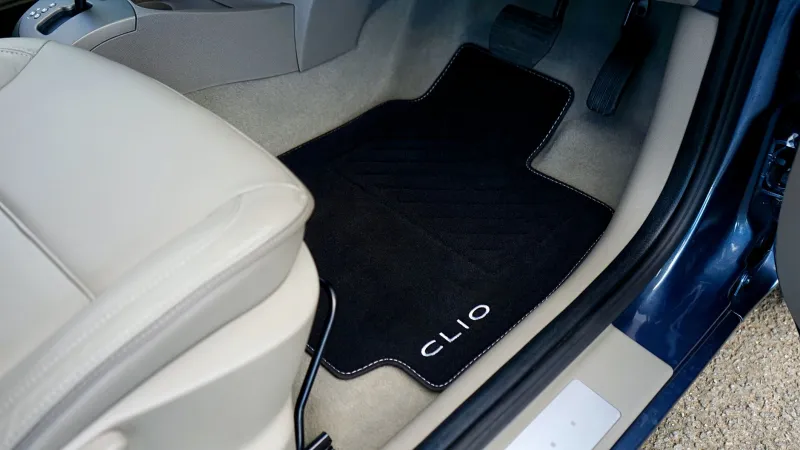
You get into the learner car, adjust the seat, check the mirrors, and then your eyes drift down to the passenger side. There they are: another set of pedals. Maybe you have seen them before. Maybe you have spent the last ten minutes trying not to think about them.
That is completely understandable. A dual control car can feel like a quiet reminder that someone else is ready to take over. But the extra pedals are not there to tell you that you are doing badly. They are there for the same reason a climbing wall has a rope, or a first aid kit sits in a kitchen cupboard. Most of the time, nobody needs them. When they are needed, it is a relief that they are there.
At Phil’s Driving Lessons, we would rather you understood the kit in the car than worried about it in silence. So let us take the mystery out of the passenger footwell.
What is actually down there?
In a typical UK manual learner car, the instructor’s side usually has three pedals: a clutch, a brake, and sometimes an accelerator. They are linked to the same systems you are using from the driver’s seat. In an automatic learner car, you will normally find just a brake pedal on the passenger side, and occasionally an accelerator depending on the vehicle.
The brake is the one most instructors use. That makes sense. If a learner is approaching a junction a little too quickly, or the traffic ahead has changed while attention has wandered, a gentle press from the passenger side can bring things back under control without a drama. It is often brief and undramatic. Many learners feel the car slow and only then realise the instructor has helped.
The clutch is used far less often. An instructor might use it to prevent a stall from becoming a jolt, or to help the car stay smooth in a very slow manoeuvre. The accelerator on the instructor’s side is rarer still. Some cars have one; many do not. When it is present, it is generally there for very specific teaching situations, not for secretly driving the car from the left.
The safety net, not the steering wheel
Here is the key point: dual controls do not take over the steering. They do not magically drive the car. They are a small, carefully placed safety net for the pedals, and they are most useful in the moments when a little help prevents a bigger problem.
Good instructors use them sparingly. That might sound obvious, but it matters. If an instructor is constantly tapping the brake from the passenger seat, the learner never gets a clear picture of what their own inputs are doing. The best use of dual controls is quiet and occasional. You should be doing the vast majority of the driving, including the mistakes. That is how learning happens.
So if your instructor does intervene, try not to hear it as a verdict on your ability. It is usually a response to a specific moment: a closing gap, a sharp bend, a car emerging from a side road, or a pedal input that needs softening. It is not a report card. It is a shared bit of driving.
When an intervention happens
Sometimes you will feel the brake before you understand why. That can be unsettling, especially if you are already feeling nervous. The first thing to do is nothing dramatic. Keep your hands on the wheel, stay calm, and let the car settle. Your instructor will normally explain what they saw and why they acted.
A useful way to think about it is this: the dual control moment is not the end of the lesson. It is the beginning of a short conversation. Once you are safe and the car is settled, or once you have pulled over somewhere sensible, you can ask questions. What was changing ahead? Was I too fast for the approach? Did I miss a signal? Was my clutch foot too quick?
Those questions turn a surprising moment into useful information. They also give you something concrete to practise next. A learner who understands why the instructor braked is far better placed than one who simply feels embarrassed and says nothing.
How to ask without feeling awkward
You do not need a formal review meeting at the side of the road. A simple question is enough. Try something like: “What did you see that I missed?” or “Was that the junction or my speed?” or “Can we run that approach again so I can feel the difference?”
Good instructors welcome this. It shows you are engaged, not difficult. It also helps them pitch the next part of the lesson at the right level. If you are the sort of learner who goes quiet after a surprise, tell your instructor that. You could say: “I find it easier if you tell me straight after why you took over.” That is not a fuss. It is just clear communication.
The confidence bit
Dual controls can actually help your confidence once you understand them. They mean you can attempt new things without the stakes being quite so high. Busy roundabout? Tight turn? First go at a steep hill start? The safety net is there, and that can make it easier to have a go rather than shrink back.
They also help you build trust with your instructor. You are not expected to be perfect. You are expected to listen, adjust, and keep going. A brief intervention is just part of the lesson, like a teacher pointing at the right page in a textbook. It does not mean you have failed the chapter.
What to take away
The pedals in the passenger footwell are not watching you. They are not keeping score. They are a practical piece of teaching equipment, used briefly and carefully when they are needed. Most lessons will pass without much use at all.
If your instructor does use them, treat it as information rather than judgement. Ask what happened, take the answer on board, and have another go. That is how ordinary learners become calm, capable drivers. And if you are ever unsure about the controls in your learner car, just ask before you set off. A good instructor will be glad you did.