The Long Way Round Is Still the Right Way: Learning From a Planned Detour
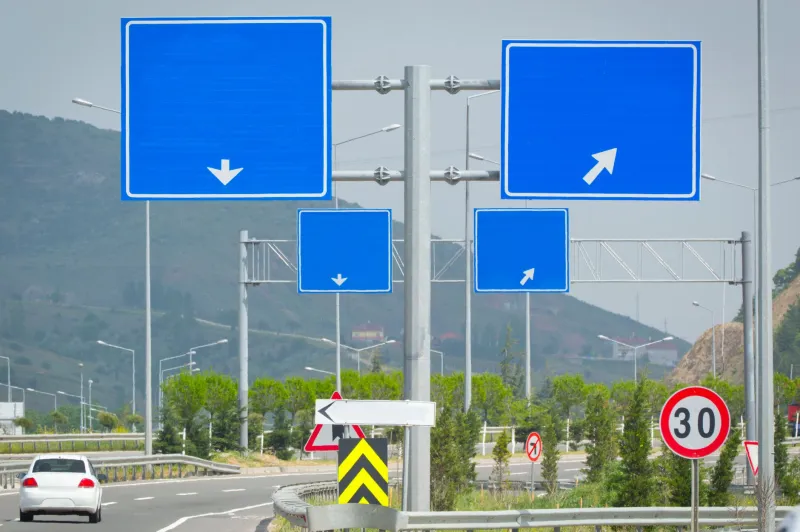
You indicated, you checked your mirrors, you committed — and then the satnav announced, with what sounded suspiciously like pity, that it was recalculating. Your stomach drops. You've missed the turning.
Here's the thing Phil keeps telling learners: that moment is worth more than ten tidy laps of the route you know by heart.
Why knowing the way is quietly holding you back
There's a particular kind of learner who can drive the test route beautifully and falls apart three streets from home. It's not a talent problem. It's a familiarity problem.
When you already know where the road goes, your brain spends its attention on driving. When you don't, it has to spend attention on reading — the markings, the signs, the shape of the junction ahead, the car that's drifting in its lane two hundred metres up. That second skill is the one that keeps you safe for the next fifty years, and it only develops on roads you've never seen.
Worth remembering too that examiners don't ask you to know where you are. The independent driving section asks you to follow signs or a short set of directions for around twenty minutes. If all your practice has been one well-worn loop, that stretch can feel like being dropped into a foreign country.
What a planned detour actually looks like
A planned detour isn't a mystery tour. It's a route your instructor builds on purpose, with a specific problem in mind.
It might be a mini-roundabout with a poor sightline. A junction with a filter lane that isn't signposted as clearly as it should be. A stretch where the lane markings have worn away to a rumour. A left turn onto a road that immediately kinks, so you have to adjust your speed after you've committed.
The trick is dosage. Small amounts of unknown, with a calm voice beside you and no timetable to keep. If you're doing private practice with a supervisor, you can build the same thing: pick a road neither of you has driven, with no particular destination in mind.
When the directions go wrong mid-drive
New drivers tend to do one of four things when they miss a turn: brake hard, swerve, apologise profusely, or start hunting for somewhere to reverse into. All four are worse than simply carrying on.
So the first rule is the simplest one: keep going. You are allowed to be lost. Being lost on a road you're driving legally and safely is not an emergency — it's an inconvenience, and inconveniences don't need split-second decisions.
Second rule: don't let a missed turn push you into something illegal or ugly. Reversing out of a junction, cutting across a solid white line to swing a U-turn, stopping on zig-zags near a crossing, or pulling up on double yellows and a red route are all ways of turning a small mistake into a real one. A bus stop, a driveway, or a pavement are similarly off the menu.
Third rule: talk. Out loud, if it helps. "I've missed my turning, so I'll carry on and find a safe place to turn around." Saying it converts a spike of panic into a plan.
A simple recovery routine
Nothing fancy here — five steps you can run through without thinking.
- Hold your speed and your line. Do not brake just because you're annoyed. Keep the car settled and predictable for everyone behind you.
- Say what's happened. Name it, then name the fix.
- Look for a legal option, not a convenient one. The next side road, the next roundabout, the next proper junction. If nothing safe appears in the next few hundred metres, that's information, not a crisis — keep going.
- Signal early and clearly. Your recovery manoeuvre shouldn't surprise anyone. Mirrors, signal, position, speed — the same sequence as always.
- Reset to the next decision. Not the whole journey. Just the next junction.
Roundabouts are your best friend here. Going all the way around to come back on yourself is completely legal, thoroughly ordinary, and something experienced drivers do every single day.
What the instructor is actually watching
Not the turn you missed. The thirty seconds afterwards.
Good observation under pressure, a signal given in good time, a sensible speed through an unfamiliar junction, and a quick return to calm — that's the whole lesson in miniature. Learners who can recover well are the ones who cope on the day, whatever the day throws at them.
Practising it yourself, once you've passed
Try this on a Sunday morning. Drive to a town you don't know well, park up, and navigate home using only signs. No satnav for the first ten minutes. You'll take a wrong turn. You'll take three. You'll also arrive home having genuinely read a road rather than followed an arrow.
And next time the directions fall apart — on a lesson, on a test, or on a wet Tuesday in November ten years from now — you'll recognise the feeling. Not panic. Just a small, familiar voice saying: right, let's find somewhere to turn round.
A missed turn is a free lesson. Take it.