The Pumps Aren't Watching: A New Driver's Guide to the Petrol Station
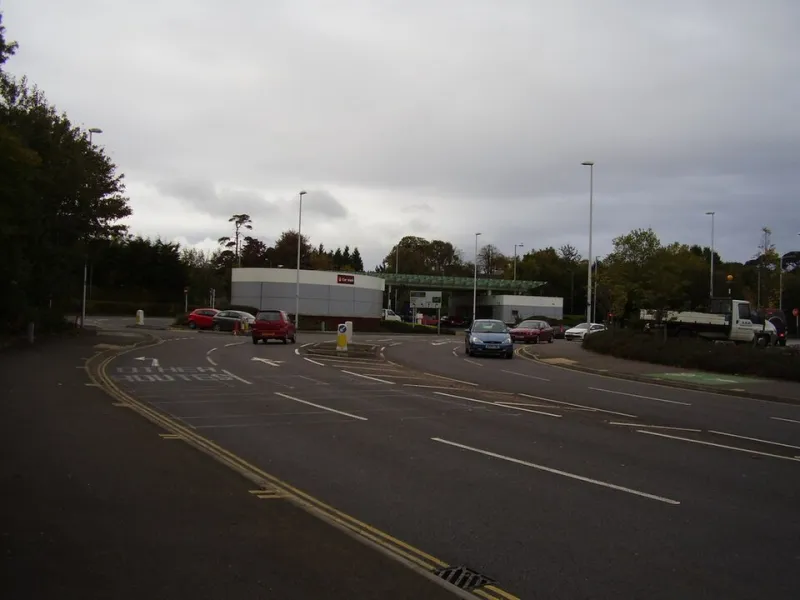
Photo: Anthony Vosper , CC BY-SA 2.0, via Wikimedia Commons
Nobody warns you that the first genuinely nerve-wracking drive after passing your test isn't the motorway. It's the petrol station.
It's tight, it's one-way, there's a queue behind you, the pumps look like they belong in a laboratory, and everyone else seems to be doing it at speed with one hand. They aren't, by the way. Half of them are guessing too.
Here's how to make it boring — which is exactly what you want.
Approach: slow in, slow out
Forecourts run on a one-way system you can usually read from the arrows painted on the tarmac, and from where the cars are facing. Follow it. Nothing on a forecourt rewards speed, and the tight radius of the corners will punish a wide, fast turn.
Watch for pedestrians more than you'd expect — people wander away from their cars, doors swing open, and someone is always reversing out of a space they should have reversed into.
When you join a queue, join it behind a car, not behind a pump. If you line up behind an empty pump you'll eventually have to shuffle forward awkwardly. Wait your turn, then drive to whichever pump becomes free. Don't worry about which side the pump is on — you'll manage.
Which side is your fuel cap?
Genuinely useful trick: look at the fuel gauge. Most cars have a small arrow next to the pump icon, and it points to the side of the car where the filler is. Failing that, look in the mirror like everyone else and take your time.
Line up so the hose reaches comfortably without being stretched across your paintwork, and so you're not parked three feet out from the pump blocking the lane behind.
Engine off, then the important bit: choosing your fuel
Switch the engine off. That's not just politeness — forecourt rules and common sense both ask for it. Don't smoke, and don't sit there scrolling on your phone while the nozzle is in.
Now, the fuel itself:
- Unleaded E10 is the standard petrol at almost every UK forecourt, and it's what most petrol cars take.
- Super unleaded (E5) is higher octane. Some performance cars want it; most don't need it.
- Diesel (B7) is a completely different thing and must never go in a petrol car.
- Premium diesel exists too — more additives, more money, same nozzle shape.
Check the sticker inside your fuel flap, or the handbook, and don't assume. If you're in a hire car or a borrowed van, check before you pull in rather than while holding a nozzle.
If the wrong nozzle goes in
The single most important rule: do not start the engine. Not a flick of the key, not a press of the button.
If you've put petrol in a diesel, or diesel in a petrol, and nothing has been started, the fix is a drain — inconvenient but not catastrophic. Tell the staff at the kiosk straight away. They've seen it before, they won't be scandalised, and there's usually a mobile fuel-drain service that can come out.
If you've driven off and the car starts running badly, coughing, or smoking, pull over somewhere safe as soon as you can and switch off. Don't try to "drive it off".
Pay at pump, or pay inside?
Both are fine. Pay at pump is quicker and means less queueing, but be aware that the terminal takes a pre-authorisation of around £100 before releasing the fuel — the actual amount is corrected afterwards, though it can take a day or two for the hold to drop off your balance.
Paying inside means remembering your pump number, joining a queue, and not feeling rushed when you get to the till. Take your time. Nobody behind you is timing you.
Either way, keep your receipt if you're claiming mileage, and don't leave the car unlocked and unattended with valuables on the seat.
The tyre pressure machine nobody uses
This is the bit everyone skips, and it's the bit that saves you money and keeps you safe.
Most forecourts have an air and water machine, often free with a fuel purchase or a pound or two in coins. Pressures for your car are in the handbook, on a sticker inside the driver's door pillar, or sometimes on the fuel flap. Check them cold — meaning before a long drive, not straight after a motorway run — and remember the figures often differ between front and rear, and go up when the car is fully loaded.
While you're crouched down there, glance at the tread. The legal minimum in the UK is 1.6mm across the central three-quarters of the tyre, but most instructors will tell you to replace well before that — around 3mm in wet weather is a much better place to be. Pop the valve caps back on; they're not decorative.
While you're there anyway
Forecourts are decent little one-stop shops for the boring jobs: screenwash, oil, a cloth for the windscreen, water for the washer bottle, and a bin for the receipt you'll never look at again. Some have a jet wash, which is a whole other lesson in itself.
The routine, condensed
Mirror, slow, join the queue behind a car. Line up on the correct side. Engine off. Correct nozzle, cap off, fill, cap on. Nozzle back in its holster. Pay at pump or kiosk. Tyre pressures if you've got two minutes. Pull forward before sorting out your phone and your receipts, so the next driver can get in.
That's it. Do it twice and it stops being an event. Do it five times and you'll be the calm person in the queue wondering why the driver in front is circling the pump like it's a riddle.
It isn't. You've got this.