Ten Minutes Before the Engine Starts: A Settling Routine for Anxious Learners

Photo: nervous learner driver sitting in car before UK driving lesson, hands on steering wheel, calm preparation, via img.freepik.com
There is a particular silence that sits in a car in the two minutes before a lesson begins. The engine is off, the L plates are on, and the learner is quietly screening a disaster film in their head: the stall at the lights, the bus that pulls out, the roundabout that unravels in slow motion.
Most nervous learners assume the answer is to become a different sort of person — bolder, cooler, harder to rattle. It is not. Calm behind the wheel is rarely a personality trait. It is a routine, and routines can be borrowed.
What follows is the one I run with learners who turn up already wound tight. It takes roughly ten minutes, it happens before you turn the key, and every step earns its place.
Why the minutes before matter more than the minutes after
A lesson that starts in a flap tends to stay in a flap. If you arrive at the car park with thirty seconds to spare, wrestling your provisional licence out of a coat pocket while your instructor waits, your nervous system is already at full volume before the clutch is down. The first stall then reads as proof that today will be awful, rather than a normal thing that happens to everyone in week three.
So the routine is not about suppressing nerves. It is about lowering the temperature enough that the thinking part of your brain is still in the room when the tricky bit arrives.
Step one: arrive early enough that nothing is rushed
Ten minutes early, not on the dot. Use the time to sort out your paperwork, put your phone away in the glovebox, and stop moving. Learners who rush the approach rush everything else — and rushing is what produces the lunge into a junction, not nerves on their own.
If you are meeting your instructor at home, this still applies. Sit down. Do not spend the last ten minutes hunting for your glasses.
Step two: build your seat before you build your speed
Get in properly, every time, even when you feel silly doing it. Seat back, then seat base, then headrest, then mirrors, then belt. The order matters because each part depends on the last.
The car you are learning in may be quite different from the Fiesta you have been practising in with a parent, so do not assume the settings carry over. A seat that is an inch too far back changes how much clutch control you feel — and clutch control you cannot feel is clutch control you will not trust.
Step three: breathe out for longer than you breathe in
No incense, no whale music, no counting to ten with your eyes shut. Simply this: in through the nose for a slow count of four, out through the mouth for a slow count of six, five or six times.
The long exhale is the part that does the work. It is a bit of physiology that happens to be free, and it takes ninety seconds. Do it while the instructor is finishing their notes rather than making a performance of it.
Step four: name one goal, and only one
Ask yourself what today is actually about. Not five things. One.
It might be: hold a steady speed on the approach to junctions. Or: check the left mirror before every signal. Or, on a wobbly day: get through the lesson without apologising more than twice.
Name it out loud to your instructor. Half my job is knowing which switch you have decided to flick, because it changes what I am watching for and it changes the feedback you get afterwards.
Step five: park the what-ifs on paper
If a specific worry is circling — the box junction on the high street, the multi-lane roundabout by the retail park, the possibility that a van will sit on your bumper on the dual carriageway — write it down on the back of your theory notes before you set off.
That sounds daft. It works because an unnamed worry behaves like a background app, quietly draining the battery. Named and written down, it becomes a topic you can raise at a sensible moment instead of a fog hanging over the whole hour.
Step six: rehearse the first sixty seconds
Visualise only the very beginning: mirrors, signal if needed, clutch to the bite point, a gentle release, moving off. Not the whole lesson. Not the test route. Just the first minute.
Most pre-lesson dread is not about driving at all. It is about starting. Rehearse the start and the dread loses most of its fuel.
Prompts for the places that worry you most
Use these once you are moving, but decide them now.
Busy junctions. Decide in advance that you will not accept a gap you cannot describe out loud. If you cannot say what you are waiting for, you are not waiting for anything — you are hoping.
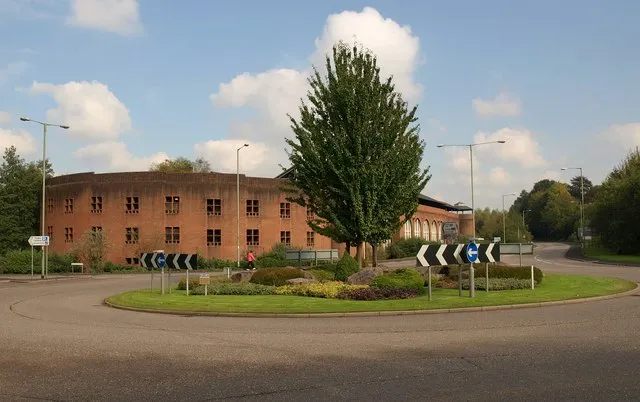
Roundabouts. Pick your lane early, before the signs run out, and remember the Highway Code basics: give way to traffic from the right, and only go when you have seen what you need to see.
Test routes. If your test centre is nearby, do not treat those roads as sacred ground. They are ordinary streets that happen to have a DVSA car park at one end. Practising them is useful; mythologising them is not.
What to do when the routine fails anyway
Some days it will. You will arrive late, the breathing will feel pointless, and the first twenty minutes will be scrappy.
On those days, shrink the goal. Instead of the planned lesson, ask your instructor whether you can spend the hour on quiet residential streets getting the basics clean again. Progress is not measured in how ambitious the road was — it is measured in whether you understood what just happened.
That is the whole idea, really. Calm is not something you are issued with at birth. It is ten minutes of small, dull, repeatable habits — and after a few weeks they start running themselves.